
Written by
William Geldart
Content Manager
Online retail growth, technological advancements and rapidly shifting consumer expectations continue to shape the eCommerce fulfilment landscape.
To put it bluntly, we’re buying more online and we want to receive items faster than ever before from brands that deliver on flexibility, cost, and sustainability.
As a result, retailers are having to continually adapt their operations to meet these demands.
Third-party logistics has a huge role to play here with demand for eCommerce fulfilment services expected to push the market to $272.14bn by 2030.
Key Trends Shaping the Growth of Ecommerce Fulfilment
Automation and AI Integration
Automation underpins eCommerce fulfilment operations, from order placement and processing to inventory management and picking and packing. Online retail simply couldn’t function properly without smart systems that can seamlessly process orders, manage stock levels, and even shipping. As fulfilment evolves, automation will accelerate and warehouses will undergo fundamental change. More than a quarter of warehouses are expected to be automated by 2027, up from 14% a decade earlier.
Faster Delivery Options
Same-day and next-day delivery services have become more commonplace. Customers expect quicker and more flexible delivery choices, as outlined in a report by Metapack. A sizeable 57% of consumers surveyed for the Ecommerce Delivery Benchmark 2025 stated that they expect deliveries to arrive within two days. However, only 29% of European retailers can meet this demand. To rise to this challenge, businesses are looking towards micro fulfilment centres (MFCs) to help them get closer to consumers. These slimmed down hubs provide a competitive advantage. And in some cases they’ll be stacked with advanced features. Retail giants such as IKEA are already utilising MFCs equipped with sorting robots to help warehouse staff pick items.
Sustainability in Fulfilment
Being more sustainable is a key priority for both retailers and consumers. Operationally, this involves providing more sustainable packaging, carbon-neutral delivery, and reduced waste. A consultative 3PL fulfilment partner will work with you to adopt more eco-friendly practices. This might include advice on packaging materials or by offering optimised delivery routes designed to cut emissions. At Whistl, we have worked with XeroE and Varamis Rail to trial the UK’s first emission-free delivery.
Ecommerce Fulfilment for Ethical Superstore
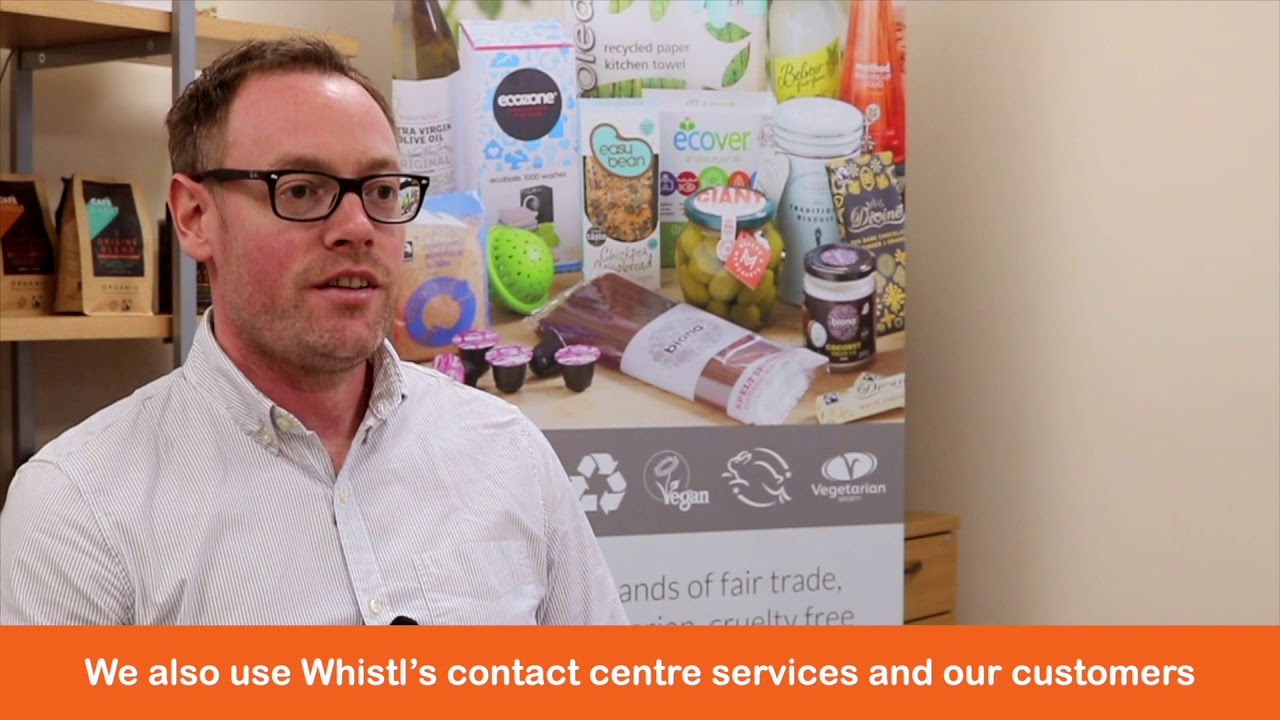
Whistl provides eCommerce fulfilment and contact centre services to support Ethical Superstore, an established supplier of eco-friendly products. As a multi-channel online retailer, Ethical Superstore carries over 7,000 SKUs and has almost 200,000 items in stock at any one time.
By partnering with us, Ethical Superstore is now better prepared to deal with huge spikes and peak sales periods. Meanwhile, our use of sustainable packaging aligns with our mutual brand values. Read our story
How to Benefit from the Evolution in Fulfilment
- Local Fulfilment: Use local warehouses or partner with a third-party logistics provider near you that has access to local and national distribution networks. Integrating with a 3PL’s inventory management system will also ensure adequate stock control and enable you to fulfil orders quickly and efficiently.
- Demand Forecasting: Partnering with an innovative 3PL provider will help your business balance supply and demand with greater accuracy. By utilising AI-powered technologies, you’ll be able to forecast demand in real-time and reduce the risk of overstocking or stockouts.
- Enhanced Returns Management: With 71% of UK online shoppers returning items at least some of the time, returns are a huge part of the operational mix. This is why it’s important to make the process as seamless as possible. Offering pre-paid return labels, local drop-off points, and access to an online returns portal with real-time tracking are some of the ways to provide a streamlined customer experience.
- Personalisation in Order Fulfilment: Consumers love personalised experiences, especially when it comes to unboxing their items. Ecommerce businesses can significantly enhance customer satisfaction by working with a fulfilment partner to offer custom packaging, branded inserts and tailored gifts or promotions to keep customers coming back for more.
The future of eCommerce fulfilment will be dominated by speed, efficiency, and sustainability.
Businesses that adapt to these trends and best-use new technologies will be able to meet customer expectations and thrive in the competitive eCommerce landscape.
Tailored and Scalable Ecommerce Fulfilment
Enhance order efficiency and boost customer satisfaction
How do I Choose Which Fulfilment Provider to Work With?
Ultimately, the process of choosing a 3PL provider should start by engaging in a consultative review of your company’s circumstances. This should include:
- Your growth aspirations
- Your customers’ expectations
- Where are your current customers based
- Where your future ideal customers will be based
- Your product dimensions and weight
- Any bespoke storage requirements
- The amount of stock you need to store
- Your Sell-Through Rate - the speed at which you will sell your stock, or in other words, clear your inventory.
- Any value-added service requirements, such as outsourced eCommerce customer service and customs clearance.
Updated: March 2025
About Whistl Fulfilment
Whistl Fulfilment is one of the UK’s biggest and best providers of integrated multi-channel fulfilment and carrier management solutions. We work with over 50 brands, including Tesco F&F, SharkNinja and Microscooters.
Operating from six sites with over 1.5million square feet of multi-user warehouse space, we ship to customers in the UK and internationally at preferential parcel rates, leveraging our scale and proprietary Warehouse Management and Carrier Management platforms to deliver exceptional value

Join our mailing list
Sign up and receive all the latest industry news and insights directly to your inbox.
Research, Insights and Industry Guides
In depth insights and research studies to help you better understand customer perceptions & expectations.
Share this article
You may also like...