Written by
William Geldart
Content Manager
In 2026, shoppers are no longer following a linear path from search to checkout. Instead, they are discovering brands through live shopping, social platforms, immersive online experiences and physical touchpoints like the pop-up store.
Our latest consumer research reveals how these channels are blending into a new retail model with discovery built around engagement and choice.
For retailers, understanding how pop‑up retail, experiential retail and digital commerce now work together is key to staying relevant.
We surveyed 1,000 UK adults aged 18-79 to uncover online shopping behaviour across different generations and shopper types.
Our findings reveal that immersive technology and pop-up retail is more than a passing trend. Shoppers are actively seeking richer retail experiences that help them buy with confidence.
From Live Shopping to the Pop‑Up Store: Key Takeaways
At a glance, the research shows:
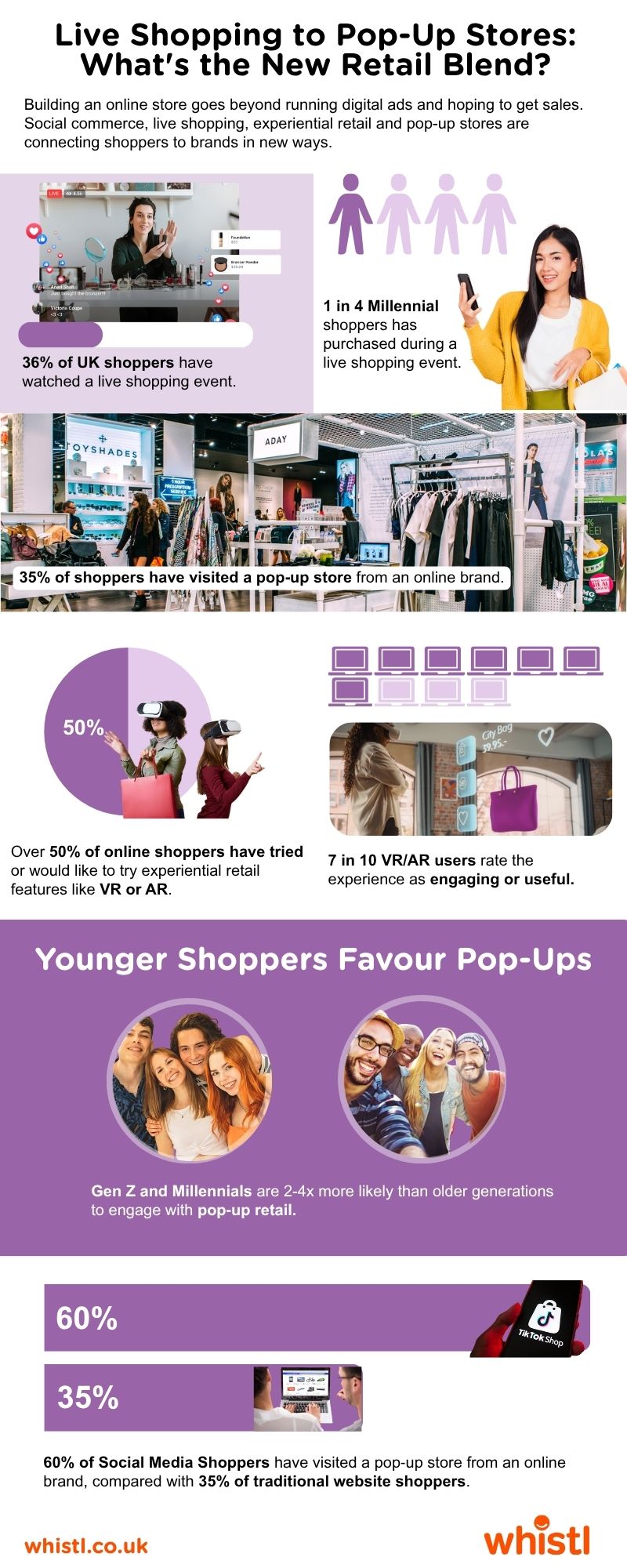
- 36% of UK shoppers have watched a live shopping event.
- Nearly 1 in 5 Gen Z shoppers has purchased during a live shopping event.
- 35% of shoppers have visited a pop-up store from an online brand.
- Over 50% of online shoppers have tried or would like to try experiential retail features like VR or AR.
- 7 in 10 VR/AR users rate the experience as engaging or useful.
- Gen Z and Millennials are 2–4x more likely than older generations to engage with pop-up retail.
Together, these numbers highlight a retail landscape where experience increasingly influences conversion.
Pop-Up Stores and More: How Is Retail Changing?
Retail is no longer about choosing between digital or physical. Instead, brands are blending channels to meet shoppers wherever they feel most confident.
The pop-up store has emerged as a powerful part of this shift, especially for online‑first brands. Unlike permanent retail, pop‑ups allow brands to:
- Test physical presence without long‑term overheads.
- Support digital discovery with in‑person reassurance.
- Create moments of exclusivity and urgency.
Importantly, pop‑ups don’t replace eCommerce. They complement it, acting as a physical extension of the online journey.
How Are Online Shoppers Engaging with Live Shopping and Social Commerce?
Live shopping is fast becoming a mainstream discovery and conversion channel, particularly for younger and more engaged shoppers.
Headline findings include:
- 36% of UK shoppers have watched a live shopping event.
- 24% of Millennials and nearly 20% of Gen Z have made a purchase during one.
- 40% of Sustainability Shoppers who watch live shopping go on to buy.
Live shopping works because it answers questions in real time. Demonstrations, reviews, and interactive chat reduce uncertainty. This helps shoppers make faster, more confident decisions.
Social commerce supports this shift. Platforms such as TikTok, Instagram and YouTube are increasingly end‑to‑end commerce environments, where content, influence and checkout happen in one place.
Experiential Retail: The Stats Behind the Growing Momentum
Experiential retail is no longer niche. Our research shows it is rapidly becoming part of the expected online shopping experience.
Key statistics include:
- Over 50% of online shoppers have either used or want to use VR or AR when shopping.
- Around half of Gen Z and Millennials have already tried features such as virtual try‑ons or AR previews.
- 7 in 10 shoppers who’ve used VR or AR describe it as engaging, helpful or useful.
- Just 1% report a negative experience, suggesting low resistance once tried.
Experiential retail delivers tangible benefits. By helping shoppers visualise products more accurately, VR and AR reduce uncertainty. In turn this helps to build trust, lower return rates and abandoned baskets.
For retailers, this data signals that experiential retail isn’t about novelty. It’s about improving decision‑making at scale.
The Rise of Pop-Up Retail: A Statistical Snapshot
The resurgence of pop‑up retail highlights a renewed appetite for physical interaction by acting as a human counterpoint in a digital‑first market.
Our research found that:
- 35% of UK online shoppers have visited a pop‑up store from an online brand.
- Gen Z and Millennials are 2–4 times more likely than Baby Boomers to visit a pop‑up.
- 60% of Social Media Shoppers have visited a pop‑up, compared with 35% of traditional website shoppers.
- The top reason for visiting is the ability to see and try products in person.
The appeal goes beyond convenience. For younger shoppers, 43% cite a “unique or immersive experience” as a major draw, while exclusivity and limited‑edition items further increase footfall.
Pop‑ups provide more than marketing moments. They are conversion‑supporting touchpoints within a wider retail strategy.
What Is the New Retail Blend?
The emerging retail model is best described as blended, not fragmented. It brings together:
- Live shopping for immediacy and interaction.
- Social commerce for discovery and influence.
- Experiential retail for clarity and confidence.
- Pop-up stores for physical reassurance.
- Flexible fulfilment and returns to support every journey.
For logistics and operations teams, this blend introduces complexity but also opportunity. Delivery choice, visibility and returns are now core enablers of experience, not background processes.
Closing Thoughts: Why the Retail Blend Matters Now
The data is clear. Shoppers don’t want more channels. They want better connections between them.
Live shopping builds trust. Experiential retail reduces hesitation. Pop‑up stores turn interest into confidence.
In 2026, the most successful retailers will be those that understand how these elements work together. By embracing this new retail blend, brands can move beyond transactions and create experiences that drive loyalty long after checkout.
Download the full report to learn more about the rise of live shopping, pop-up stores and the new retail blend.
Want to enhance your customer journey? Get in touch to learn how we can connect your customer experience, from eCommerce marketing to parcel delivery management, eCommerce fulfilment and contact centre solutions.
Share this article
You may also like...