In today's competitive retail landscape, excellent inventory management is a no-brainer. Yet there’s still an alarming number of UK consumers affected by stockouts and low stock availability.
Research by Retail Insight revealed that 60% of online shoppers are still plagued by out-of-stock products.
Not only does this cause frustration, it’s also likely to force your potential purchasers into the hands of the competition.
The Facts About Stockouts
Maintaining adequate stock levels is essential if you wish to boost sales and build a loyal customer following.
Failure to do so can have severe consequences:
- 41% of UK consumers would stop shopping with a retailer after experiencing multiple stockouts (PwC UK, 2023).
- Stockouts cost UK retailers an eye-watering £15bn every year (IHL Group, 2022).
- 65% of online shoppers that suffered a stockout bought from another site, store, or abandoned their intention to buy entirely. (GT Nexus, 2023)
In summary, stockouts are costly, inconvenient and can result in long-lasting damage to your brand image. All of which is great news for your competitors. But not so much for your bottom line.
These recent findings support the research unveiled by Whistl in 2018. We found that more than half of Brits would immediately turn to a competitor if met with stock issues.
And at the time a staggering 90% of UK consumers were regularly faced with stock-related issues, with products either low stock or unavailable.
These problems lead 42% of potential buyers to experience frustration while nearly a third expressed annoyance.

How Can Stock Notifications Influence Buyer Behaviour?
Our research also revealed some interesting insights into the psychology of stockouts and their impact on consumer behaviour.
Stock notifications were shown to have a powerful influence on buying behaviour. ‘Low stock’ notifications gave 78% of UK online shoppers the biggest sense of urgency to buy that day. This was followed by ‘X number of people are looking at this now’ (45%), ‘X number of users have looked at this item today’ (40%), and ‘X number of users have bought this item today’ (23%).
In-demand fashion items were found to have caused the most frequent stock issues, with 42% of consumers complaining about their availability. This was followed by food and drink (16%), technology (15%), and entertainment (8%).
Our findings also examined the difference in attitudes across the country. Shoppers from Newcastle were most likely to turn to competitors, followed by those in Belfast, Southampton, Bristol, London and Glasgow.
On the flip side, shoppers in Cardiff were found to be the most loyal and patient.
Melanie Darvall, Director of Marketing and Communications, said: “It was interesting to see how stock levels can affect consumer behaviour. We knew that there would be some influence, but we certainly were not expecting it to have such a large impact as our findings have shown. It was particularly insightful to see how people react when they see a notification of low stock on something they want (or think they want). The fear that it may be snapped up by someone else if they don’t act quickly typically makes them purchase immediately in order to avoid disappointment."
“It may seem obvious, but stock management is essential to effective and prosperous retailers as the alternative is customers becoming disappointed, and taking their business elsewhere.”
These words still ring true today.
And to address these challenges, it’s essential to invest in advanced inventory management systems and be transparent in your communication about product availability.
Effective inventory management is not just an operational concern. It’s a critical component of customer experience and brand loyalty.

Managing Your Inventory to Prevent Stockouts
Proactive inventory management strategies and advanced technologies can help prevent stockouts. Here's how you can optimise stock levels and improve inventory management.
Predictive Demand Forecasting
Leveraging historical data will help you anticipate future demand more accurately.
By analysing past sales performance, seasonal trends, and external factors, retailers can:
- Identify patterns in consumer behaviour.
- Anticipate demand spikes during peak periods.
- Adjust stock levels proactively to meet expected demand.
Real-Time Stock Tracking
Implementing RFID technology in your warehouse can have huge upsides with inventory management. Whistl’s stock selection process involves picking and packing products and items, powered by RF (radio frequency technology) and our own warehouse management system (WMS).
Benefits include:
- Automated inventory tracking provides up-to-the-minute stock levels.
- Increased shipping accuracy with item-level tracking.
- Improved inventory accuracy compared to traditional methods.
Benefits of Integrating with a 3PL Provider's WMS
Working with a third-party logistics (3PL) provider offers access to advanced technology and expertise. The best 3PL services integrate with your order management systems and leverage their own Warehouse Management Systems (WMS) for seamless connectivity.
This delivers:
- Real-time visibility into inventory levels, stock locations and delivery status.
- Improved planning and forecasting capabilities.
- Minimised risk of stockouts and reduced need for emergency shipments.
- Improved accuracy in order fulfillment and reduced picking errors.
- Optimised picking and packing processes.
- Efficient route planning for warehouse staff.
- Reduced time spent on order preparation.
- Improved inventory accuracy leads to fewer shipping mistakes and returns.
Watch Out for Overstocking
Preventing stockouts is hugely important. But on the opposite end of the spectrum, you’ll find an equally troubling issue – overstocking.
Stockouts’ sinister cousin was especially noticeable at the onset of the cost-of-living crisis. While retailers had stockpiled goods in anticipation of high demand, consumers were forced to tighten their purse strings.
As a result of overstocking, The Retail Resilience Barometer 2023 found that UK retailers were forced to sell nearly half (48%) of their total stock at a discounted rate.
While this can have short-term benefits, it’s unsustainable over time and can have crippling effects. The downfall of Made.com illustrates this point. The furniture retailer found itself caught in a vicious cycle of falling sales and excess stock, which ultimately proved to be a defining factor in the company’s demise.

Benefit From the Whistl Fulfilment Approach
In an era of instant gratification and endless online options, retailers cannot afford to disappoint customers through poor stock management. The ability to provide consistently available and quickly delivered products is now a fundamental expectation, not a luxury.
By embracing technology and adopting a customer-centric approach to inventory management, you can transform potential frustration into lasting loyalty.
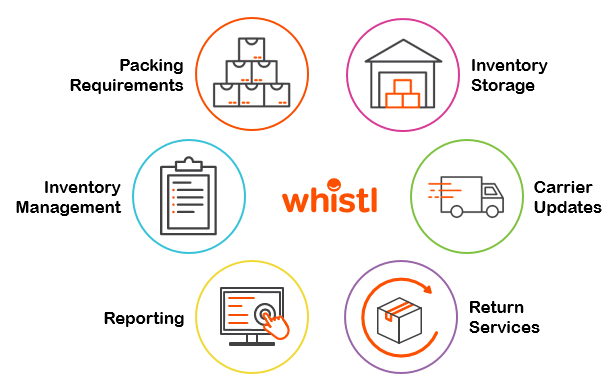
Is your business growing fast and in need of more grunt behind its operations? We offer more than just warehousing and a place to store your products.
As part of a scalable eCommerce fulfilment solution, our inventory management systems ensure complete order and stock management.
Our comprehensive inventory management support helps eCommerce brands, wholesalers and retailers understand when it’s time to replenish products, review suppliers, or discontinue stock lines.
Get in touch to find out how we can help your eCommerce business avoid customer frustration and maintain profitability.
Updated: January 2025
Join our mailing list
Sign up and receive all the latest industry news and insights directly to your inbox.
Research, Insights and Industry Guides
In depth insights and research studies to help you better understand customer perceptions & expectations.
Share this article
You may also like...