What is Impulse Buying?
Consumer psychologist D.W. Rook offers one of the earliest definitions of impulse buying in his research article “The Buying Impulse” (Journal of Consumer Research, 1987). According to Rook, impulse buying occurs when a consumer experiences a sudden, often powerful and persistent urge to purchase something immediately. This feeling is hedonically complex and can stimulate emotional conflict.
What Proportion of Online Shoppers Engage in Impulse Buying?
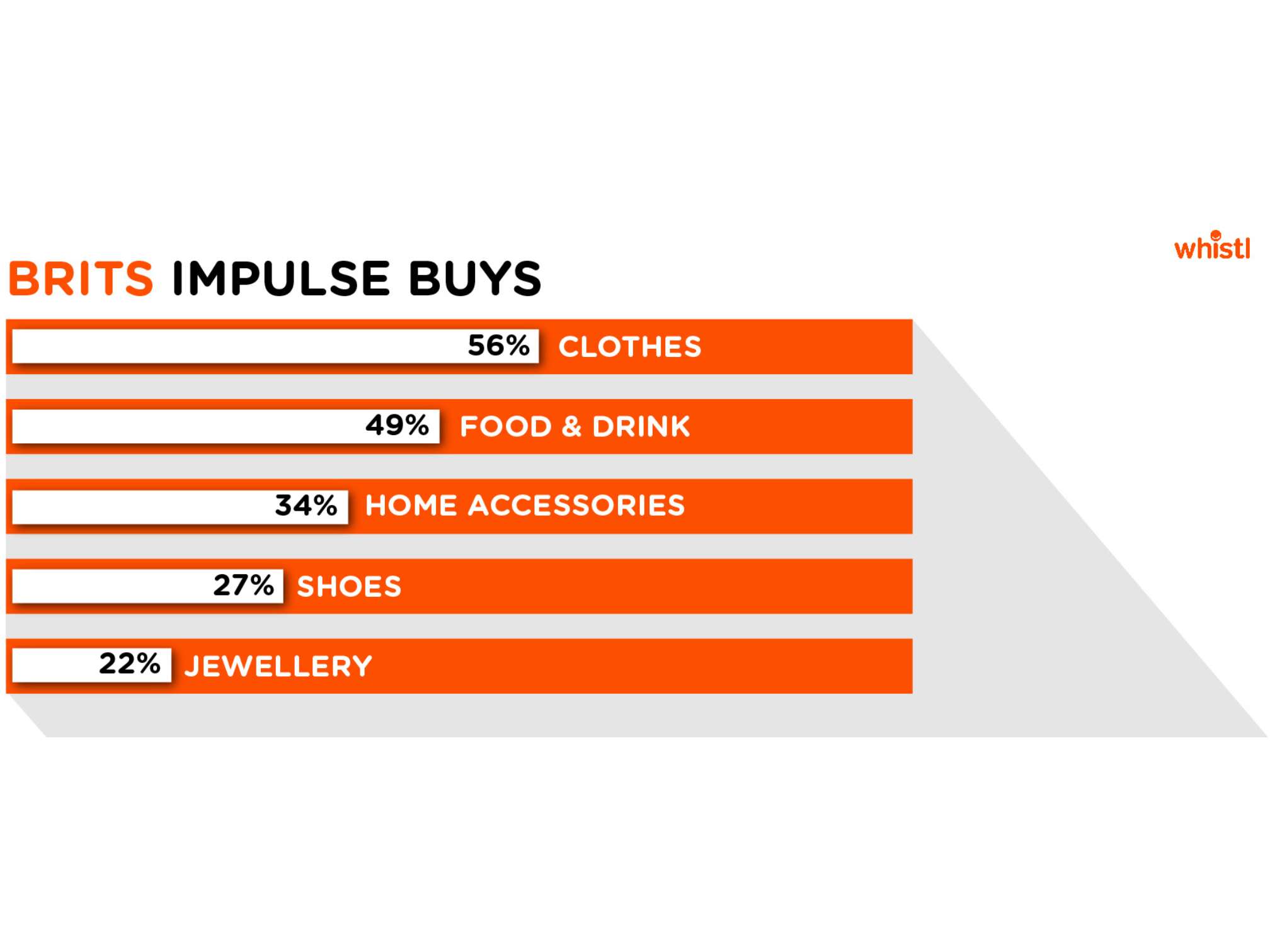
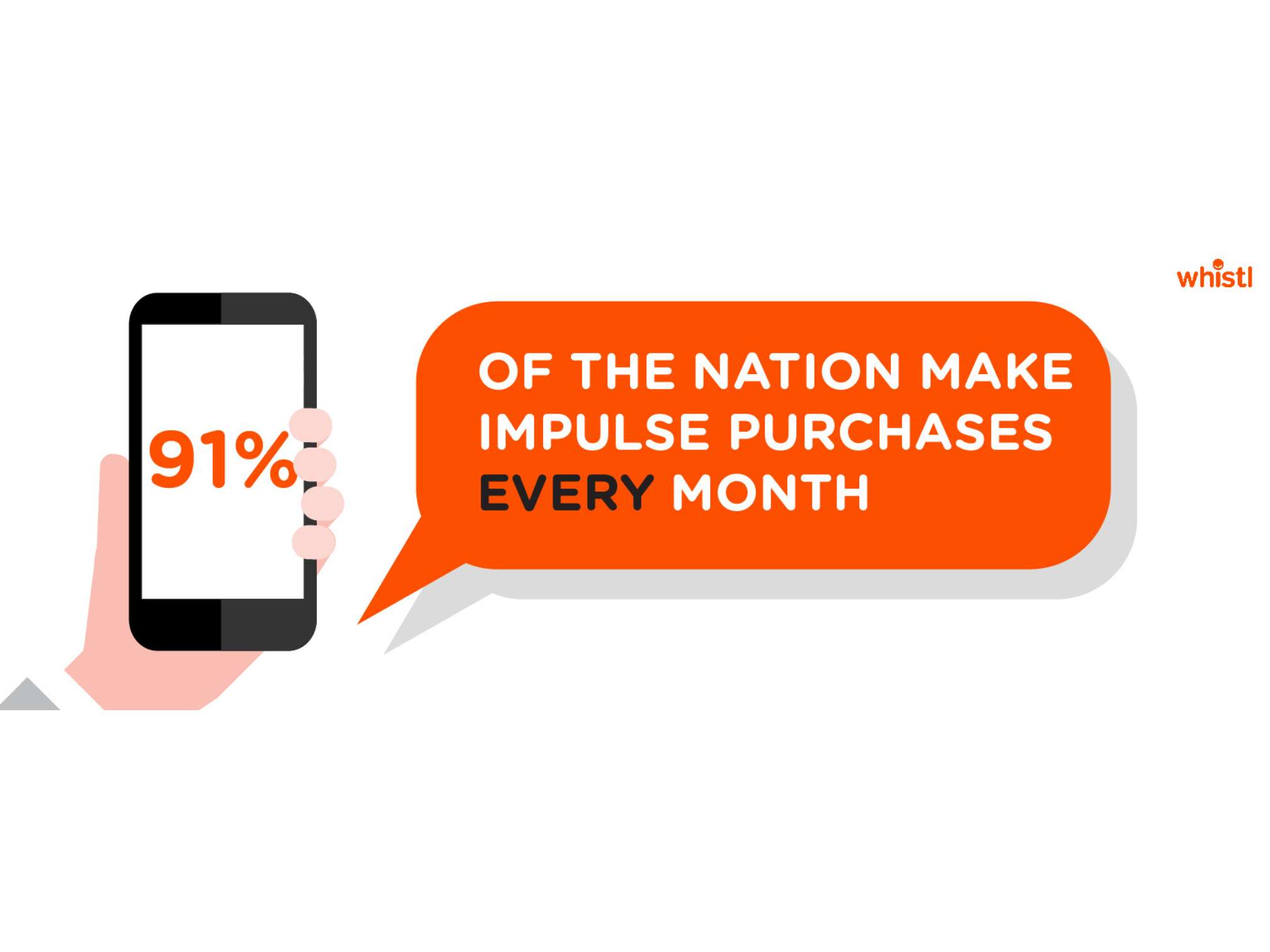
Historically, brick-and-mortar shopping has outperformed online shopping when it comes to driving impulse buying. Upon surveying over 1,000 members of the British public, Whistl found that:
- 54% online shoppers complete an impulsive buy compared to 59% of in-person supermarket shoppers.
- Collectively, Brits spend over £3 billion on impulse purchases per month.
-
Most online impulse purchases take place on eBay and Amazon, with consumers reportedly feeling they were getting a good deal (46%), they were up late at night, browsing while tired (39%) or that they’d had a drink (24%).
Throughout the Covid-19 pandemic, internet penetration and eCommerce adoption accelerated by five years in a matter of months, resulting in more impulsive buys happening online. Given the high street decline, retailers must increasingly capitalise on consumers’ impulsive tendencies using their digital real estate.
A wide variety of methods can be learned from in-store retail and applied to the online shopping environment. There are also eCommerce-only tactics to drive impulse purchases and additions to existing orders.
How Can Online Retailers Dial Up Impulse Buying?
In this article, we detail 10 different ways online retailers can tap into consumers’ hedonistic desires and drive spending.
Conditional Free Upgrades
With 94% of consumers more likely to make a purchase due to free delivery, free upgrades can be a strong motivator to encourage impulsive buys. This isn’t possible for every online retailer, but most can build free delivery into the product price. Calculating your current Average Order Value (AOV) and offering free shipping above a certain threshold (for example, 20% above your AOV) can encourage consumers to increase their basket value.
Impulsive buyers demand fast delivery, whether they have to pay for it or not. The Whistl survey found that under-24s were most impatient, with only 16% saying they were happy to wait a week, compared to 38% of over-65s. Therefore, another tactic worth considering is to offer free upgrades to premium delivery options at the point of checkout.
Consumers love surprises, especially impulsive buyers. Consider offering free product samples or gift-wrapping and personalisation during gifting seasons, which can either be managed in-house or by an outsourced eCommerce fulfilment centre.
Encourage Up-Sell
Impulse buying doesn’t have to come exclusively from new customers. Existing customers, as well as those already planning to buy something, can make impulse purchases or impulsively add to an existing order with an online retailer.
To achieve this, carefully map out your product range to ensure that relevant products are offered at checkout and throughout the buying journey. However, ensure you don’t inadvertently drive customers to buy cheaper or less profitable alternatives.
Offering bulk-buy discounts on individual or groups of products, such as tiered volume-based pricing and ‘3 for 2’-type offers, can also encourage consumers to buy complementary products from online retailers. For example, if they were already buying a parasol, make sure they don’t forget to buy a parasol base.
A final up-sell tactic is to recommend products that are ‘frequently bought together’ to ensure consumers don’t experience ‘Fear of Missing Out’ (FOMO).
Train Live Chat and Phone Staff to Take Payments and Encourage Up-Sell
As detailed in the last section, online shoppers can buy on impulse as well as complete pre-planned purchases. Many consumers will contact your customer service team, opening another opportunity to up-sell and drive impulse buying.
By equipping your live chat and inbound phone call handlers with better product knowledge, they will be able to educate prospective and existing customers about products that will complement their prospective and existing orders.
During spikes in demand driven by seasonal changes and campaigns, working with an inbound call handling specialist can help you capitalise on web-to-phone consumer demand.
Social Media Product Tagging
Social media platforms are powerful in their ability to drive impulsive buys, word-of-mouth recommendations and endorsements. Other than your own website, they give you the greatest amount of control by encouraging consumers to buy from you on the spur of the moment. Thanks to the launch of Instagram Shops and Facebook Product Tagging, your followers can now buy your products without even leaving the social media platform.
Gamification
Humans are naturally competitive, and online retailers can tap into their powerful reward mechanism with a method called gamification. Tactics such as prize giveaways, timers on offers, encouraging sharing of a product page to access a discount code, and tiered rewards programmes are all ways online retailers can encourage consumers to make unplanned, emotionally-driven purchases.
Limited Time Offers
An opportunity to save money with sales promotions can be perceived as advantageous by consumers, increasing their chance of completing a purchase (Kchaou & Amara, 2014; Reid et al., 2015). Remarketing an offer to visitors who didn’t convert on their first visit, or encouraging converters to sign up to a loyalty programme, will ensure your brand remains in their mind the next time they have a hedonistic desire for a product just like yours.
Send and Automate Email Campaigns
There are two distinct audiences you can engage via your email marketing platform to encourage impulse buying: your existing customer base and your email subscribers who aren’t yet customers. While your customers may not make an impulse purchase on their first visit, you can still incentivise impulse purchases further down the line via email to customers who are waiting for a discount offer.
According to research by Invesp, more than 64% of online consumers wait to buy things until they go on sale, whereas more than 59% search for promotional codes before buying anything online. Around 30% of online consumers sign up for price tracking services to get an email when the price drops for the item they want to buy, whereas 22% purchase products from their preferred brands only when they’re on sale or with coupons.
Another tactic is to trigger emails to customers when they abandon their cart or spend a certain amount of time on a particular product page. If customers have already opted into your marketing funnel, automation can be a powerful way of driving conversions.
Offer Prize Giveaways with Relevant Partners
Most of your potential customers will only land on your website because they are already in the buying cycle. But what about customers who aren’t currently in the buying cycle, but are likely to love your product? Partnering with a company that shares a similar target audience to you and combining an offer with a prize giveaway is a clever way to generate impulse purchases while increasing your brand exposure and growing your opt-in database.
Enhance your Conversion Rate Optimisation
Many impulsive buys are prevented by poorly optimised ‘buy now’ buttons and checkouts. Making your online store interactive, attractive and easy to navigate will encourage customers to engage with your products. Videos, 3D photography and social proof such as Trustpilot reviews can all encourage your customers to buy on impulse - as can related product recommendations, reminders about offers and live sales notifications.
Most importantly, for the sake of your user experience and search engine optimisation, your online store needs to be as fast and responsive as your eCommerce platform allows. At the point of checkout, it’s critically important to offer your customers sufficient and appropriate delivery options to match impulsive buyers’ increased urgency and demand for in-flight services.
Utilise Social Listening Tools to Find Impulsive Buyers
Our final recommended tactic to encourage impulsive buys is to use either a social listening tool or an advanced search on social media platforms to find potential customers who have unmet needs in real-time. For example, if there is a trending topic that aligns with your product offering, this is where you and your brand can join the conversation to add value and connect with potential customers to encourage in-the-moment sales.
Final Thoughts on Maximising Your Impulse Sales
As with all recommendations, it’s important to test these tactics before rolling them out across your entire digital real estate. Carrying out customer surveys to find out why they didn’t buy can help you understand what stops you from generating impulsive buys as an online retailer. Perhaps your product is out of stock, or consumers are willing to buy, but your website lacks clarity.
Your online store is unique, so your circumstances could vary wildly from another eCommerce business. Above all else, ensure your digital assets are as attractive, informative and user-friendly as possible to capitalise on consumers who are ready to buy right now.
If you’re looking to dial up impulse buying among your customers, be prepared and partner with a reputable eCommerce fulfilment partner like Whistl.
Join our mailing list
Sign up and receive all the latest industry news and insights directly to your inbox.
Research, Insights and Industry Guides
In depth insights and research studies to help you better understand customer perceptions & expectations.
Share this article
You may also like...