In the beginning, Amazon only sold books online, and eBay was a disruptive marketplace. And since those early days of online shopping, the way we manage orders and get goods to customers has changed beyond recognition.
Ecommerce fulfilment has certainly evolved over the last 30 years, growing alongside online retail.
Warehouses are no longer just a place to store stock. UK fulfilment services are now driven by new technologies to increase efficiency, reduce human error, and get products to customers as quickly, securely, and sustainably as possible.
And let’s not forget the human element. Systems and technology may underpin modern fulfilment operations, but people are at its very core, with multi-skilled fulfilment teams working 24/7 to get products to customers.
What’s next in this digital journey, and how did we get here?
From TV Remotes to Tablets: the History of Online Shopping in the UK
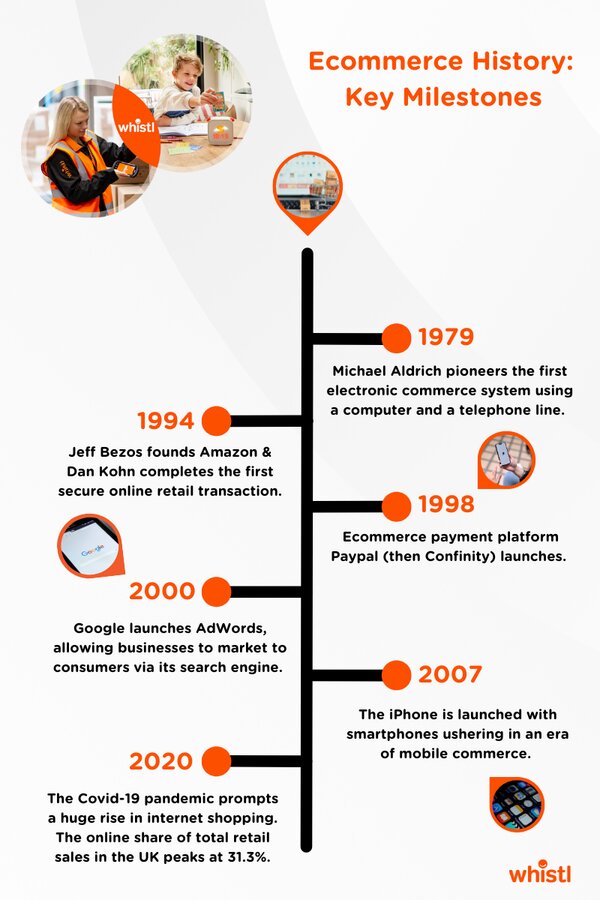
While the Internet certainly opened up access to goods and services, eCommerce has been around since the late 1970s. English inventor Michael Aldrich developed the first eCommerce in 1979 using the Videotex system to enable business-to-customer and business-to-business transactions.
The BBC showed one of the first examples of this technology in action. In 1984, Jane Snowball compiled a shopping list on her TV screen and ordered via her remote control.
She and Aldrich had no idea that this would give birth to an industry worth £130bn in the UK.
But while the UK may have started the ball rolling, it’s the U.S giants that often get the credit in any history of online shopping.
Jeff Bezos would launch Cadabra in July 1994 and change the name to Amazon later that year (if you knew Book Stacks Unlimited pre-dated Amazon you get bonus points).
Meanwhile, in the same year, Dan Kohn oversaw the world’s first secure retail transaction: a Sting CD sold via NetMarket.
These were the early days of online shopping, laying the foundations for the eCommerce we know today.
But as more and more tech-enabled consumers emerge, meeting demand will become the next challenge.
Deregulation and the Growth of the Parcel Delivery Market
The deregulation of the UK postal industry set the ball rolling for big changes in how businesses could access delivery services.
In 2006, Postcomm ruled that Royal Mail’s monopoly on letter delivery was at an end. This opened up the market to competition and, therefore, more choice for businesses.
Against this backdrop, delivery management partners (including Whistl) began offering more flexible, cost-effective, and innovative solutions.
These would extend to parcel delivery, where bulk mail operators could use the scale and strength of their existing networks to offer retailers and brands more choice.
As a result, more shipping options enabled online businesses to grow.
To highlight this uptick, UK parcel delivery volume skyrocketed from 1.3bn in 2013 to over 3.5bn in 2020-2021.
The Ecommerce Generation and Fulfilment
From those early days to today’s online monsters, eCommerce has evolved and adapted to consumer demand.
Now we expect everything at our fingertips, whether that’s a mouse click or a finger swipe.
And the stats back this up. Total eCommerce revenue in the UK has grown from $92bn in 2017 to $144bn. The Covid-19 pandemic accelerated this growth as online shopping became the new normal for many consumers.
M-commerce alone is expected to reach £109.34bn by 2027, with 60% of all eCommerce retail sales happening on mobile.
All of which has put more pressure on fulfilment and parcel delivery.
The rise of outsourced third-party logistics
Third-party logistics (3PL) has become the go-to model for retailers and brands looking to scale and deliver reliability, value, and choice to their consumers.
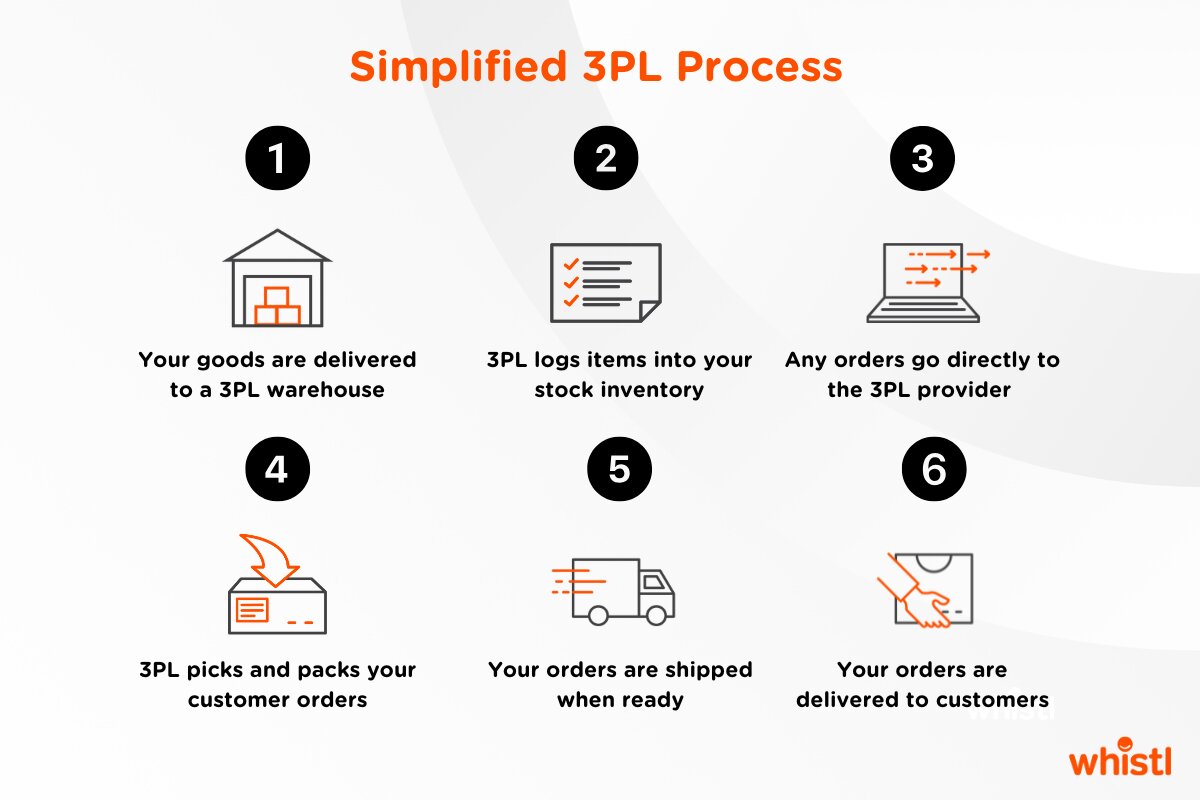
But what is 3PL? In short, 3PL is outsourcing one or more of your logistics processes to an external supplier.
This will include:
- Receiving items
Your chosen 3PL will receive items at their fulfilment centre and scan, log and process them quickly and accurately. Once items have been checked and verified, they will be stored in a designated area of the warehouse, ready for picking.
- Picking items
Once orders start to come in, the fulfilment centre team will get to work on retrieving (picking) the items from their location. Smart integrations allow a retailer’s Order Management System (OMS) to talk to a 3PL’s Inventory Management System (IMS) and update stock listings in real-time.
- Packing items
Now that items have been picked, they need to be packaged. This is a critical stage, and your 3PL will support you to ensure the packaging is right for your items’ dimensions and weight. They will work with you on branded or custom packaging requirements with safety, security and sustainability always top of mind.
- Shipping items
Now it’s time to get your orders out of the warehouse. A 3PL will manage the delivery process from label creation to selecting a shipping carrier and creating an order tracking number to share with your customer. 3PLs that offer multi-carrier shipping options will help you save on costs and enjoy more choice.
Additional Services
Other options include returns management, reworking and refurbishing items, and even outsourcing customer service. By offering these services, a 3PL can provide a full-service solution for warehousing, order fulfilment, parcel delivery, returns, and customer retention programmes.
Why partner with a 3PL?
Whether you outsource to a 3PL depends on many factors.
For example, have you run out of warehouse space? Is it too expensive to run your own in-house fulfilment solution? Do seasonal peaks put too much pressure on your operations? Do you have the space and capacity to scale in the future?
If you do decide to outsource, then there are many benefits.
These are:
- Cost and time savings: Running your own warehouse is expensive. Rents, facilities, staff and suboptimal inventory management can be a heavy burden on your business.
- Smoother processes: Access to expertise and technology across the supply chain will reduce errors and simplify your operations.
- Support for peaks: Having extra support for peak sales periods takes the stress out of managing increased orders.
- More free time: Working with a 3PL gives you time back to focus on your business.
Read The Ultimate Guide to eCommerce Fulfilment
Fulfilment and Last-Mile Logistics Trends
Fulfilment and parcel delivery (last-mile, or final-mile logistics) will continue to evolve. Customer expectations and the need for more efficient and sustainable practices will drive this change.
Here are a few trends to watch:
AI Inventory Management
AI is transforming inventory management, with 75% of global businesses expected to use it as part of their warehouse automation processes by 2030.
This technology analyses vast amounts of data to predict demand, manage stock, and streamline supply chains.
Robotics and Human Collaboration
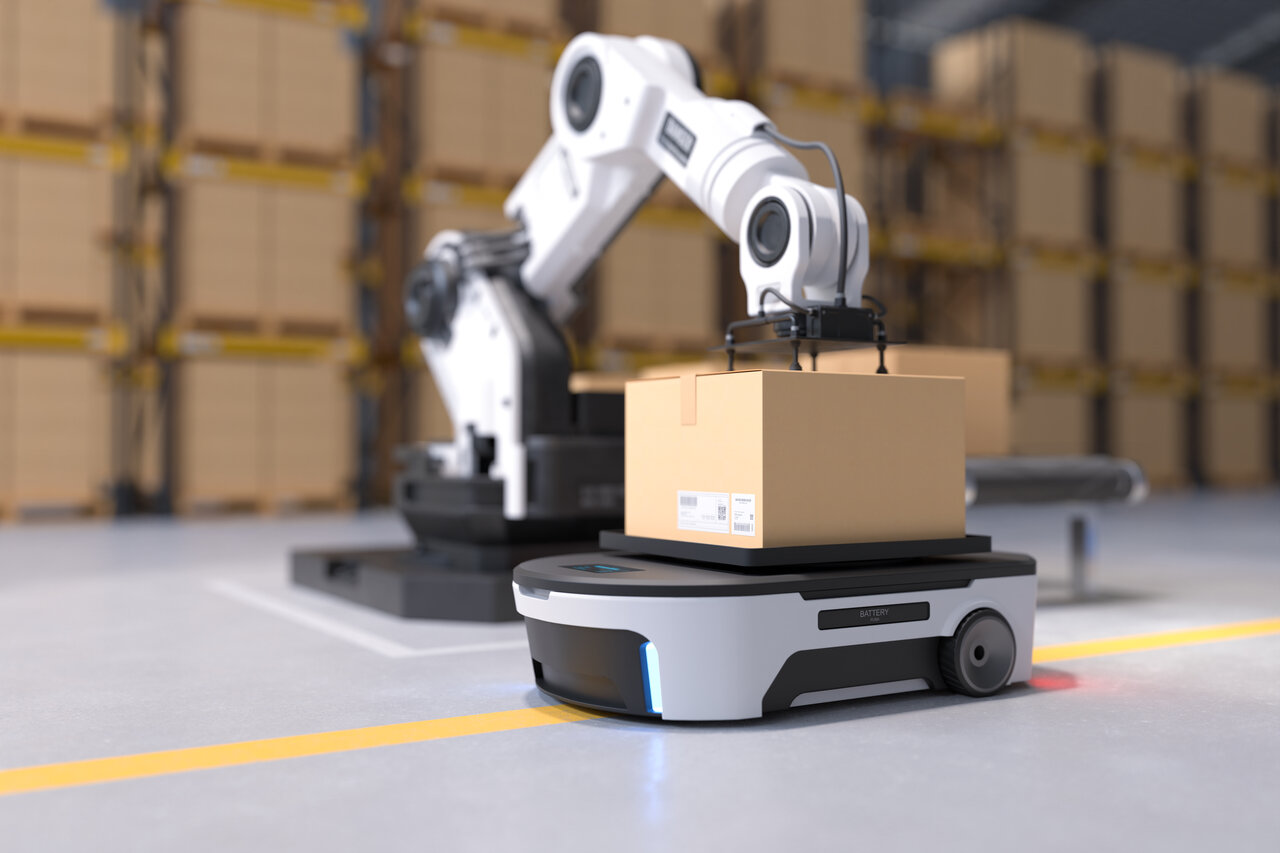
Modern warehouses are now using collaborative robots (cobots) alongside human workers. These clever machines are designed to lift and transport items around the warehouse while increasing speed, reducing errors, and augmenting human tasks. Leading UK retailers such as Ocado have been using robots for a number of years, assisting with 400,000 items per week at its Luton facility.
Sustainability
Sustainability is now top of the agenda in warehousing and logistics. As the industry looks to become greener, many 3PLs are prioritising renewable energy sources, energy-efficient lighting, waste reduction and recycling initiatives.
Switching to more sustainable packaging materials is another way 3PLs are reducing their environmental impact.
Micro-Fulfilment Centres
Micro-fulfilment centres are expected to bring inventory closer to customers by offering faster deliveries and more efficient last-mile logistics.
MFCs are particularly useful for businesses that offer quick, localised services, such as e-grocery and retail.
Ultimately, the companies that adapt to these trends and put customer-centric fulfilment at the top of the agenda will be the ones that succeed in the competitive eCommerce world.
Growing fast or already established, and looking to make your order fulfilment more efficient? We build fulfilment solutions for leading brands and retailers across various industries, as an extension of their team.
Get in touch to find out more about our tailored and scalable fulfilment solutions.
Updated: January 2025
Join our mailing list
Sign up and receive all the latest industry news and insights directly to your inbox.
Research, Insights and Industry Guides
In depth insights and research studies to help you better understand customer perceptions & expectations.
Share this article
You may also like...